
Game Rooms for Team Building
Remote teams struggle with something offices get for free: people actually knowing each other. Organised team activities feel forced. Scheduling a "fun meeting" feels transactional. And when colleagues don't really know each other, it's harder to collaborate, extend grace, or build the kind of trust that makes teams work. Game Rooms solve this by making bonding a place in your space - not an event on a calendar.
What is it?
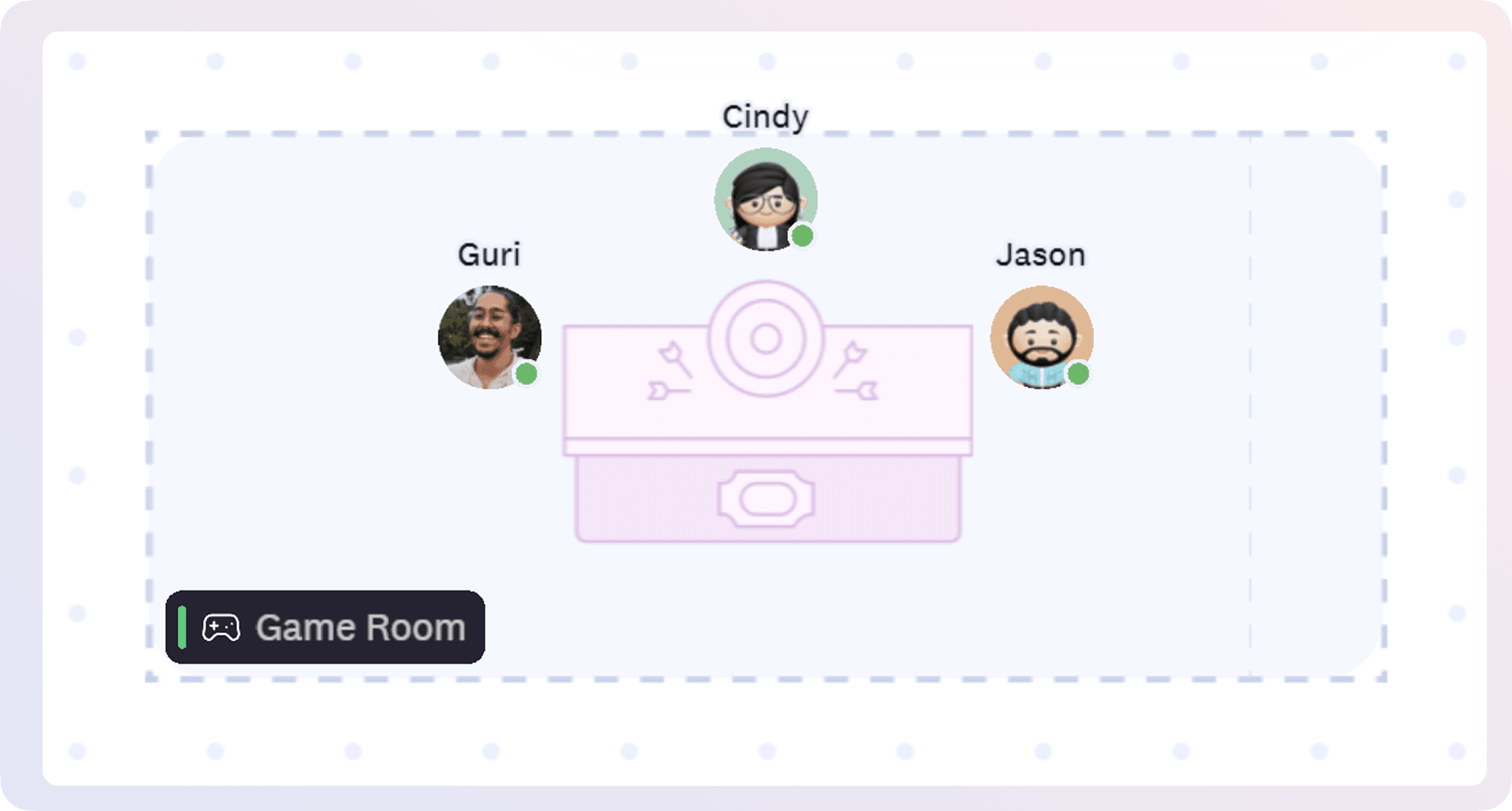
Game Rooms are meeting rooms in your Cosmos space where multiplayer games open automatically when people walk in. No links to share, no apps to install, no one needs to organise anything. Set any room as a Game Room, and it becomes a place your team drops into when they want a break, a quick laugh, or a reason to talk to someone they don't usually work with.
Why Use Game Rooms?
1. People bond when they're not trying to
The best relationships at work don't form in scheduled meetings. They form over something small — a shared joke, a bit of competition, a moment where someone shows a side of themselves you didn't expect. Game Rooms create those moments without anyone having to plan them.
2. Know your team beyond their job title
Two Truths and a Lie reveals who's lived in five countries. Cosmos Art shows who can't draw but doesn't care. Trivia exposes who knows too much about 90s music. These aren't just games — they're how colleagues become people to each other.
3. Break the ice without the cringe
No one has to say "let's go around and share something about ourselves." Walk into the Game Room, a game starts, and conversation flows. Works for new hires, cross-team introductions, or communities meeting for the first time.
4. Give your team a reason to take breaks together
Remote work makes it easy to stay heads-down all day. A Game Room in your space signals: it's OK to step away, and there might be someone there to play with when you do.
12 Games Across 3 Categories
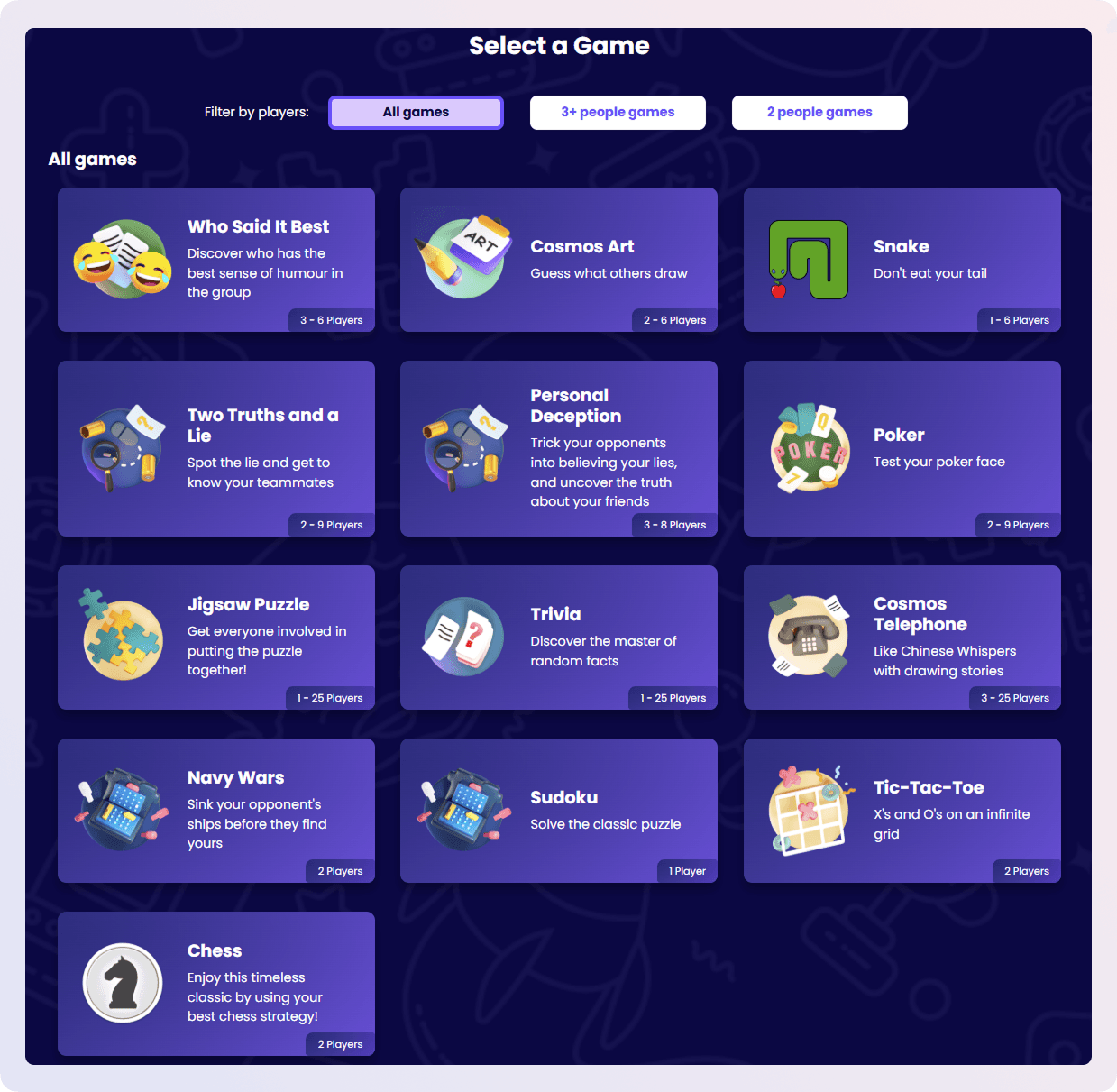
🤝 Team Building & Ice Breakers - Games focused on interaction and getting to know each other.
- Two Truths and a Lie — Know your teammates outside their work and build connection
- Who Said It Best — Discover who has the best humour on your team
- Personal Deception — Know your teammates on a deeper level and trick your opponents with lies
- Cosmos Telephone — Bring out the creative side of your team and see how well they communicate
👥 Group Play - Games that work with larger groups and keep everyone involved.
- Cosmos Art — Friendly creative competition to break the ice
- Cosmos Trivia — Brain teasers to find out who has the most random knowledge
- Jigsaw Puzzle — Work towards a common goal and sharpen observing skills
- Snake — Quick solo fun or challenge your friends
⚔️ Friendly Duels - Test strategic thinking with competitive one-on-one games.
- Navy Wars — Simplistic gaming for non-gamers who want in on the fun
- Tic Tac Toe — Play with anyone, any skill level
- Chess — Classic brain teaser for one-on-one challenges
- Sudoku — Solo play for when you need to decompress
How It Works
1. Set the room type — Click any room card → Details → Set as Game Room
2. People walk in — Games are already there, ready to play
3. Pick a game and go — No downloads, no setup, no waiting
That's it. The room does the rest.
.png&w=3840&q=75)
Use Cases
- For Remote Teams - Set up a Game Room alongside your team's desks. After a long sprint or on a Friday afternoon, people drop in without anyone scheduling a "team building activity." It just happens.
- For Communities & Cohorts - Ice-breaking in large groups is hard. Game Rooms let members play together before they have to talk — lowering the barrier from "introduce yourself to a stranger" to "play a quick round of trivia."
- For Onboarding - New hires feel awkward. Instead of back-to-back intro calls, point them to the Game Room. They'll learn more about their colleagues in one round of Two Truths and a Lie than in a week of standups.
- For Educators & Study Groups- Students who know each other learn better together. Game Rooms build the familiarity that turns a group of individuals into a cohort that supports each other.
The purpose isn't productivity. It's people actually knowing each other.