How to Increase Team Morale in Your Disengaged Team
Your team isn't unmotivated. They're structurally disconnected.
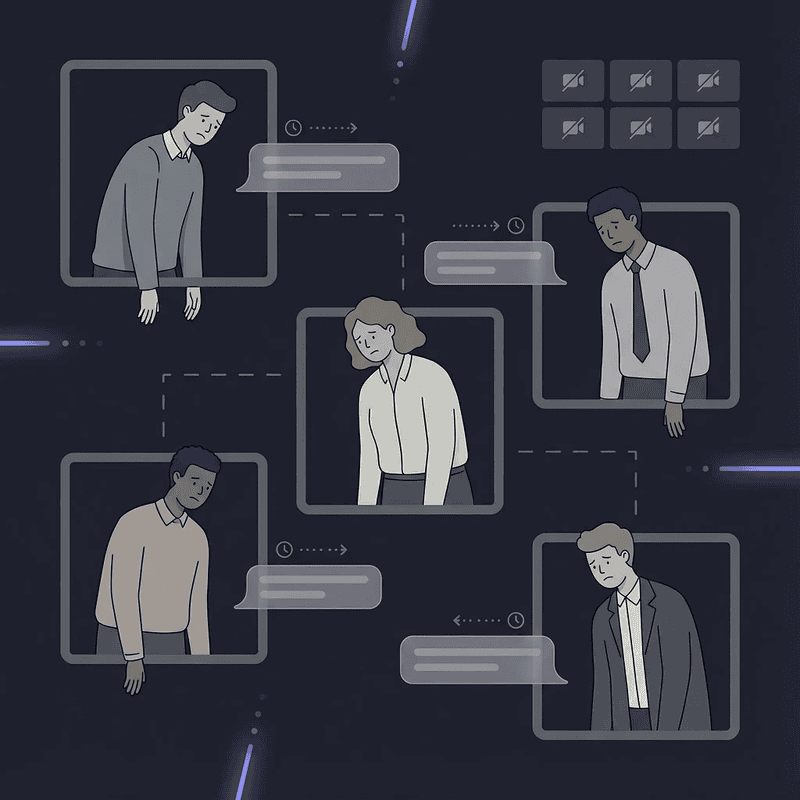
You notice it in the delayed Slack responses, the cameras-off meetings, the lack of energy in standups. Your team feels like strangers working in parallel, not colleagues working together. Morale is down, engagement is non-existent, and you're wondering what went wrong.
Here's what's really happening: Only 31% of employees are engaged at work in 2024, the lowest level in a decade according to Gallup. Even more alarming? Disengaged employees cost the global economy $8.8 trillion annually in lost productivity.
But the problem isn't your team. It's how remote work structures connection — or rather, how it doesn't. Let's explore why team morale collapses in remote settings, and what actually works to rebuild it.

What Is Team Morale (And Why It Matters)
Team morale is the collective mood, attitude, and satisfaction level of a team. It reflects how employees feel about their work, their teammates, and their sense of belonging. High team morale leads to productivity, collaboration, and retention. Low morale leads to disengagement, quiet quitting, and turnover.
The data is clear: Turnover rates are 43% higher for disengaged teams compared to engaged ones.
For remote teams, morale isn't just about productivity. It's about survival. When your team works in isolation, morale is the invisible glue holding everything together.
The Root Cause: Why Remote Work Kills Team Morale
Let's be real: remote work has massive benefits, but the main con is that you don't get any real human interaction. It's like talking to virtual people online. There's no human interaction. You're looking through one window.
1. Invisible Work = No Social Feedback
Your team might feel their morale is down because their work feels invisible and meaningless. Because in remote work, there is no immediate social feedback.
People finish projects and get delayed thumbs-up emojis instead of genuine reactions. It feels like presenting your work to a grid of black boxes with muted microphones. Contributions disappear into the void. They don't matter because there's no social feedback.
The research confirms this: 67% of workers feel lonely at work some or all of the time, according to a 2024 Ringover survey. Fully remote employees report 25% higher loneliness than on-site workers, according to Gallup.

2. Every Interaction Is Scheduled and Work-Focused
Because every interaction you're doing is scheduled and work-focused, you don't have any opportunity for casual human connections. Working with usernames and profile pictures doesn't make you feel connected. They feel like texts instead of real people.
You're missing watercooler moments that used to happen in offices where you bumped into each other, got to know new people, had quick short chit-chats that gave you a mood boost. A lot of people start to feel isolated and disconnected. They feel like they're sitting there alone. They're not part of a team. Others are on the other side of the wall.
3. Lack of Recognition Feels Hollow
There's another reason: lack of recognition that feels personal. In remote settings, all recognition feels formal and delayed. By the time a manager mentions work, it's been a few days, and the employee has already mentally moved on.
Recognition feels hollow — like a box being checked, rather than genuine appreciation. 58% of workers in health and medicine feel under-recognized, and this extends across industries in 2024.
There's no feeling of shared win or collective celebration. Wins get announced in Slack with emoji reactions. There's no collective experience. No feeling of, "Oh, we did this together" or "We achieved something." It's more like, "Oh, we did this. It's done. Now let's move to the next task."
In a setting like this, would you have your morale up or down? That's a simple question.
Why Traditional Tools Make Disengagement Worse

The tools we're using are created to increase disengagement by design. Zoom and Slack make engagement nearly impossible.
The Zoom Problem: Scheduled-Only Connection
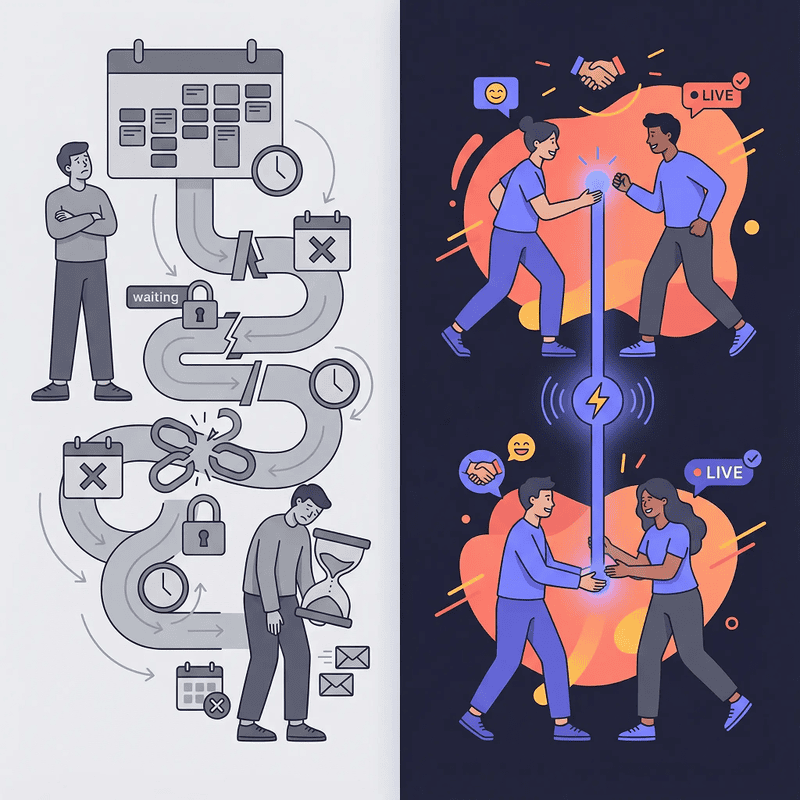
In Zoom, if you want to connect with someone, you have to schedule a meeting. That quick 2-minute question becomes a 30-minute calendar event three days from now. By the time the meeting happens, the context is gone, the energy is gone, and both people are exhausted from back-to-back calls.
Remote employees attend 50% more meetings than in-office staff according to Flowtrace research, yet feel more isolated than ever.
The Slack Problem: Async Creates Friction
If you want to connect with someone on Slack, you do async threads. You send a message, wait hours, schedule calls, get answers 24+ hours later. There's no persistent presence or spontaneous interaction — everything feels formal.
People stop asking for help; they just struggle alone. Work becomes solitary. Collaboration friction means every 2-minute question becomes a multi-day ordeal.
The Invisibility Problem
These tools have eliminated every casual interaction that used to happen in offices — coffee chats, hallway conversations, overhearing funny moments. Every conversation is scheduled and work-focused. You don't get time to interact with teammates as humans, only as functions and roles.
Remote work strips away immediate feedback. You're not seeing faces react to your work. There's no immediate "thank you" when you help someone. There are no social signals that tell your brain, "Hey, what you did mattered."
The Hidden Costs of Low Team Morale
Low team morale doesn't just make people unhappy. It destroys everything.
1. Productivity Collapses
Engaged employees outperform disengaged peers by more than 40%. When morale is low, people do the minimum. They don't go above and beyond. They don't care.
2. Turnover Skyrockets
Turnover rates are 18-43% higher for disengaged teams. Your best people leave first. They find companies where they feel valued, seen, and connected.
3. Innovation Dies
When people feel disconnected, they don't share ideas. They don't take risks. They don't collaborate. Innovation requires psychological safety and connection — both of which disappear when morale is low.
4. Culture Erodes
Low morale is contagious. One disengaged person affects the whole team. Soon, everyone is going through the motions, counting hours, dreading meetings.
What Actually Works: How to Increase Team Morale

The solution isn't surface-level morale boosters. You can't motivate people into engagement when your infrastructure creates disengagement. You need structural changes to how remote teams connect.
1. Create Opportunities for Spontaneous Connection
The most powerful shift? Replace scheduled-only interactions with instant access when you both need it.
Virtual office platforms enable what physical offices had naturally: the ability to see who's available, walk over, and start a conversation in seconds — without scheduling, without links, without ceremony.
This is how Frontier's team increased employee NPS by 20%: by replacing formal, scheduled meetings with quick, spontaneous conversations that happen when both people are available.
"Cosmos has dramatically enhanced our productivity, culture, and engagement. Our employee NPS increased by 20% as a result. It helped create a stronger sense of belonging."
— Mike Williams, Production Manager, Frontier
When teammates can have quick 2-minute conversations instead of scheduling 30-minute meetings, work feels collaborative again. Connection feels natural, not forced.
2. Make Recognition Immediate and Personal

Recognition works when it's immediate, specific, and public.
Don't wait for formal reviews. Recognize wins in the moment. When someone solves a problem, delivers great work, or helps a teammate — say something immediately.
In digital spaces where teams can see each other, recognition becomes visible and collective. When you publicly thank someone in a shared space where others can see it happen, it creates the social validation that remote work strips away.
Employees say they'd be more productive if recognized more frequently. Make recognition a daily habit, not a quarterly checkbox.
3. Build Connection Beyond Work Transactions
Every interaction your team has shouldn't be work-focused. You need casual, human moments.
Create spaces for:
Morning coffee chats where work talk is off-limits
Focus rooms for body doubling where people work silently together for accountability
Spatial areas for networking where spontaneous conversations happen
Team games, trivia, or social hours
The key is making these low-effort and spontaneous, not mandatory scheduled events. When social connection requires scheduling, it becomes work. When it happens naturally because you see teammates online, it feels authentic.
4. Address the Root Cause: Tools That Enable, Not Restrict
You can't fix morale with pizza parties when your tools create isolation. 24% of businesses identify lack of connection as a big challenge according to Ringover.
Invest in infrastructure that enables connection:
Persistent presence - See who's online and available throughout the day
True Statuses - Control your availability (Available, Listening, Focus, Away) so you can collaborate when ready without feeling "always on"
Instant communication - Start conversations in seconds, not schedule them for days later
Visual connection - See teammates, not just green dots or usernames
When Reconciled's 60-person accounting firm implemented a virtual office, the impact was immediate:
"Everyone being available in our Cosmos space created a real sense of community. We go through crunch times much faster compared to back-and-forth messaging. For people who need community and quick support, Cosmos is a game-changer."
— Keama, Accounting, Reconciled
5. Foster Transparency and Trust
Be transparent about:
Company goals and challenges
Decision-making processes
Individual contributions and impact
What's working and what isn't
When people understand the "why" behind their work and see their impact, morale improves. When they feel like mushrooms (kept in the dark), disengagement grows.
6. Invest in Professional Growth
Employees who see opportunities for advancement stay engaged. Disengagement often comes from feeling stuck.
Provide:
Clear career paths
Skill development opportunities
Mentorship and coaching
Challenging work that stretches abilities
People don't disengage when they're growing. They disengage when they feel stagnant.
Team Morale Boosters That Actually Work
Beyond structural changes, here are specific morale boosters to implement:
Quick Wins (Implement This Week)
Start meetings with personal check-ins - "What's one good thing that happened this week?"
Create a wins channel - Public recognition for any wins, big or small
Have 1-on-1s focused on people, not just tasks - Ask how they're doing, what they need, what's frustrating them
Enable personal rooms - Give people instant collaboration spaces without scheduling overhead
Medium-Term Changes (Implement This Month)
Establish team rituals - Weekly all-hands, monthly celebrations, quarterly offsites
Create async + sync balance - Not everything needs a meeting, but some things need real-time collaboration
Measure and address isolation - Survey team on connection, loneliness, sense of belonging
Invest in virtual office infrastructure - Replace disconnection-by-design tools with connection-by-design spaces
Long-Term Strategy (Implement This Quarter)
Build culture intentionally - Don't let culture happen by default; design it deliberately
Train managers on remote leadership - Managing remote teams requires different skills than in-person
Create career development programs - Mentorship, skill-building, advancement opportunities
Measure what matters - Track engagement, belonging, morale — not just productivity metrics
What Not to Do: Common Morale Mistakes
Mistake 1: Forced Fun
Mandatory team-building events where attendance is tracked feel like work, not connection. Make social activities optional and low-pressure.
Mistake 2: Surface-Level Recognition
"Great job, team!" doesn't work. Recognition must be specific, personal, and timely. Say what they did well and why it mattered.
Mistake 3: Ignoring the Root Cause
You can't fix disengagement caused by structural disconnection with pizza parties. Address the tools and systems that create isolation.
Mistake 4: Monitoring, Not Trusting
Surveillance tools and activity tracking destroy morale. Trust-based flexibility beats micromanagement. True Statuses show availability, not activity — big difference.
Mistake 5: Treating Symptoms, Not Disease
If morale is low, ask why. Don't throw solutions at symptoms without understanding root causes. Survey your team. Have honest conversations.
The Future: Rethinking Remote Team Connection
Team morale in remote settings isn't about working harder to stay connected. It's about designing systems that make connection natural, not forced.
The best remote teams are moving away from disconnection-by-design tools (scheduled-only Zoom, async-only Slack) toward environments that enable:
✅ Spontaneous conversations when both people are available
✅ Visible presence so people feel less isolated
✅ Human moments beyond work transactions
✅ Immediate recognition that feels authentic
✅ Cultural rituals that build belonging
This isn't about replacing async work. It's about balancing async efficiency with sync connection — the best of both worlds.
Gallup research shows that engagement is at a 10-year low. Disengagement costs $8.8 trillion annually. Your team's morale matters — not just for them, but for your bottom line.
Key Takeaways
Team morale is collapsing in remote work: Only 31% of employees are engaged in 2024, the lowest in a decade
The root cause is structural disconnection: Remote tools eliminate spontaneous interaction and social feedback
Invisible work kills morale: 67% of workers feel lonely; lack of recognition makes contributions feel meaningless
Traditional tools make it worse: Zoom creates scheduling overhead; Slack creates async friction; both eliminate casual human moments
What actually works: Spontaneous connection, immediate recognition, human moments beyond work, trust-based flexibility
Structural solutions beat surface fixes: Virtual offices enable natural connection that scheduled-only tools can't replicate
Real results: Teams using connection-by-design tools see 20% NPS increases and stronger cultures
The future of remote work isn't more meetings or better Slack etiquette. It's infrastructure that makes human connection natural again.
Ready to rebuild team morale? Discover how virtual office solutions create connection that scheduled meetings and async tools can't replicate.
Comments
Your comment has been submitted