Meeting Fatigue Is Real: How Back-to-Back Meetings Kill Productivity
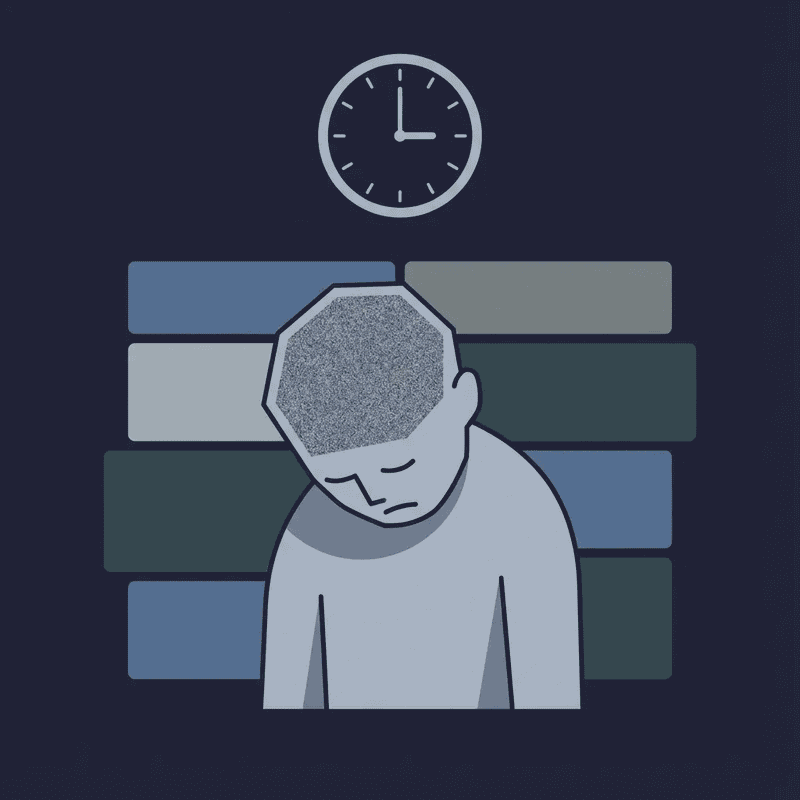
By 3PM, your brain feels like static. You've been in seven back-to-back Zoom calls since 9AM, and you still haven't started the strategic document that's actually due today. Sound familiar?
You're not lazy. You're not unmotivated. You're experiencing meeting fatigue — and the neuroscience behind it confirms that online video calls drain your brain in ways physical meetings never did.
Here's what's really happening: 78% of workers say they attend so many meetings that it's hard to do actual work, according to 2024 research from Atlassian's survey of 5,000 knowledge workers. Even more alarming? 95% of workers experience video meeting fatigue, with symptoms ranging from mental exhaustion to physical pain, according to Dimensional Research's 2022 study.
This isn't just about "too many meetings." Remote work has fundamentally changed how meetings work — and it's breaking our brains. Let's explore why meeting fatigue happens, why back-to-back meetings are neurologically draining, and what you can do about it.
The Neuroscience of Meeting Fatigue: Why Video Calls Drain Your Brain
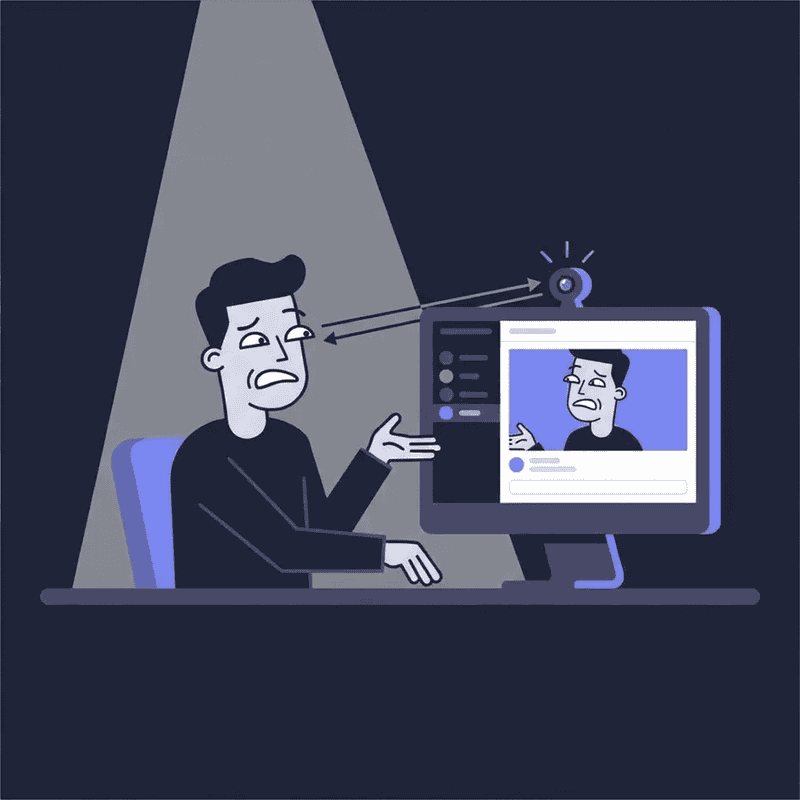
Online video calls are not similar to what we had in physical offices. They're neurologically draining in ways we're only beginning to understand.
Unnatural Eye Contact Creates Cognitive Overload
In a video call, everyone is visible in a grid of videos. You're having unnatural close-up eye contact with multiple people simultaneously, which feels highly intense. Your brain interprets sustained direct eye contact as either a threat or an intimate interaction — neither of which is appropriate for a casual work discussion.
Self-Monitoring Exhaustion
You're constantly monitoring yourself — how you're visible on camera, how you appear on video, how other people perceive you. This self-consciousness creates what researchers call "mirror anxiety." 49% of individuals report being exhausted due to being on webcam, according to research from the University of Georgia published in 2021.
In a physical meeting, you're not watching yourself. Your focus is directly on what the speaker is saying.
Processing Delays Drain Cognitive Resources
The delays in audio, bad audio quality, poor video connections, and network issues all cause you to process more data during online meetings. Your brain is working overtime to:
Compensate for missing nonverbal cues
Decode emotion without seeing full body language
Fill in gaps from audio delays
Interpret communication through screen fatigue
Functional MRI data reveals that live face-to-face interactions activate brain regions involved in reward (the anterior cingulate cortex, ventral striatum, and amygdala) far more than video recordings or calls. Without these unconscious neurological rewards, video calls require compensatory cognitive and emotional effort just to stay engaged.
The Performance Trap
Instead of focusing on the actual conversation, you feel like you're performing. You're doing exaggerated nodding, maintaining "authentic" facial expressions, asking questions to show attention, and managing your on-screen presence.
This constant performance creates emotional and cognitive drain that's invisible but measurable. It's why you finish a two-hour Zoom call feeling like you've given an exam.
Why Remote Work Creates More Meetings (And Why They're Back-to-Back)
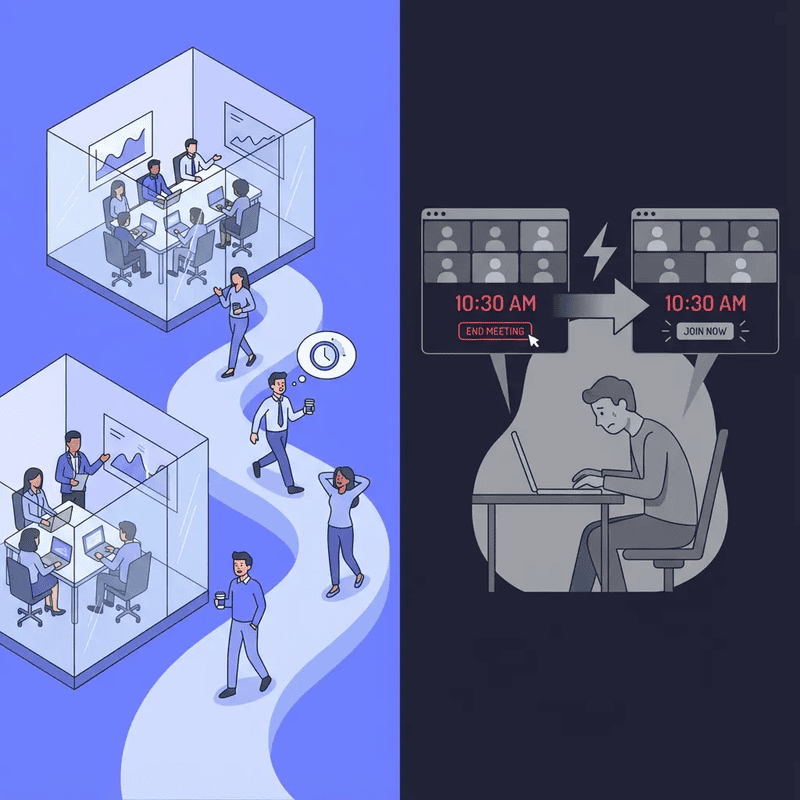
The meeting explosion in remote work isn't random. There are structural reasons why remote teams end up with calendar Tetris.
1. Zero Recovery Time Between Meetings
In offices, if you have a meeting at 10AM that ends at 11AM, the next meeting won't start at 11AM. You get a natural buffer — walking to another room takes 5-10 minutes, and the next meeting starts at 11:15 or 11:30.
In remote work? Zoom meeting ends at 10:30AM, next starts at 10:30AM — instant transition without any recovery. You sit in one, close the window, and immediately open another. There's no break between them.
Research from Microsoft's 2024 Work Trend Index shows that brief breaks between meetings are crucial for reducing stress accumulation. Without them, stress compounds exponentially throughout the day.
2. Every Interaction Becomes a Scheduled Event
In offices, if you have a question, you ask someone in 30 seconds and get an answer. Problem solved.
In remote work, every interaction requires scheduling. That 30-second question becomes a 30-minute calendar event. What used to be a quick shoulder tap now requires:
Finding a mutual time slot
Sending a calendar invite
Waiting for the scheduled time
Joining a video call
Having the conversation
Ending the call formally
The friction of scheduling transforms micro-interactions into macro-meetings.
3. Leadership Anxiety Creates Visibility Meetings
Remote work introduces a new type of meeting that rarely happened in offices: meetings scheduled to manage management anxiety about visibility.
When managers don't see people working, they compensate by scheduling regular meetings to catch up with people and see what everyone is working on. In offices, they see people working around them even without interaction. They know work is happening.
In remote settings, these meetings get set up as:
Weekly one-on-ones
Daily stand-ups
Team syncs
Project check-ins
These meetings aren't about collaboration — they're about creating visibility for managers feeling anxious about what their team is doing.
4. Meetings Feel "Free" in Remote Work
Somehow, setting up a 30-minute call with someone in remote work feels free. There's no perceived cost.
In the office, if you want a meeting with someone, you think: "Do I really need a meeting? Is it OK to ask for their time?" There's social friction that makes you consider whether it's necessary.
In remote work, you just set up the call and expect them to join. Because it feels free, people book calendars whenever they see slots are open.
There's also no alternative for quick conversations — it's either slow async communication or an expensive 30-minute meeting for a 30-second question.
The Productivity Crisis: How Back-to-Back Meetings Destroy Deep Work
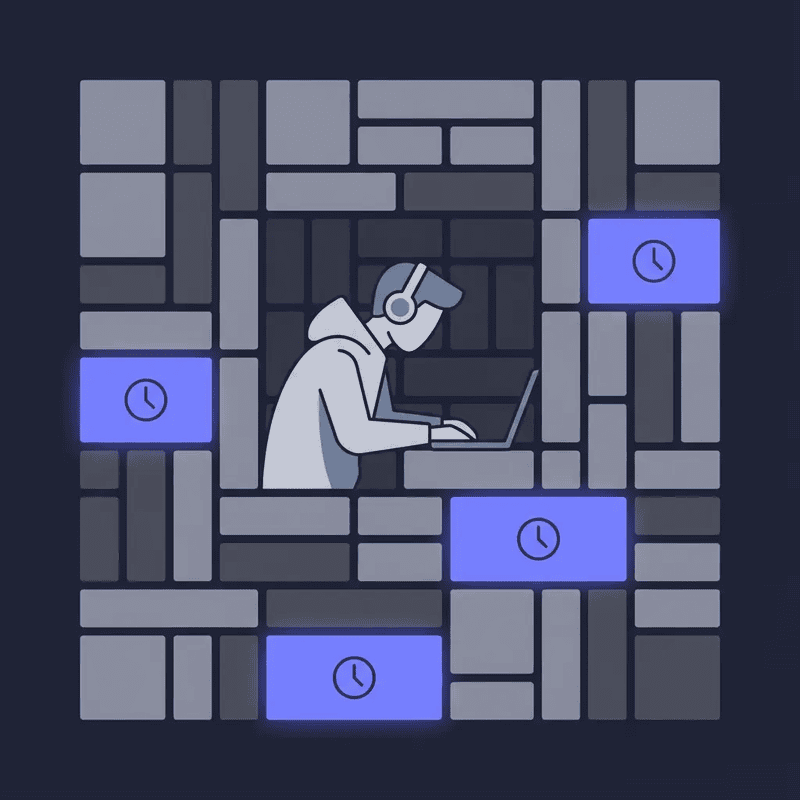
The challenge isn't just that meetings are tiring. It's that they make meaningful work impossible.
Deep Work Requires 90+ Minutes of Uninterrupted Focus
Research by Cal Newport and confirmed by cognitive science shows that deep work — the strategic, creative, complex thinking that actually produces value — requires at least 90 minutes of uninterrupted concentration to achieve flow state.
Back-to-back 30-minute meetings fragment attention cycles into useless chunks. 83% of employees spend up to one third of their workweek in meetings, leaving only fragmented time for actual work, according to meeting statistics research.
Context Switching Consumes 40% of Productivity
When you switch between a meeting, a task, another meeting, and another task, you're not just losing time. You're losing cognitive capacity.
Research from the American Psychological Association found that task-switching can reduce productivity by up to 40%. Every time you switch contexts, your brain needs time to:
Offload the previous context
Reload the new context
Retrieve relevant information
Rebuild mental models
By the time you're in flow, another meeting notification pops up.
The Afternoon Productivity Void
More than half your day is spent in meetings. Less than one-third is spent on tasks that actually produce output.
And by the time you're free from back-to-back meetings and sit down for actual work, your brain is fried. You can't focus. Creative ideas won't come. You're stuck in a void, unable to finish the work.
This creates a vicious cycle:
Morning: Meetings
Afternoon: Too exhausted for deep work
Evening: Force yourself to work overtime
Next day: Repeat
51% of workers have to work overtime at least a few days a week due to meeting overload, and for those at director level and up, that number rises to 67%, according to Atlassian's 2024 research.
The Hidden Costs of Meeting Fatigue
Meeting fatigue doesn't just make you tired. It erodes everything that makes work sustainable and meaningful.
1. Creative Thinking Disappears
When your cognitive resources are depleted by meeting marathons, creative thinking is the first casualty. You can't solve complex problems in 20-minute gaps. You can't think strategically when you're mentally exhausted.
45% of employees feel overwhelmed by the number of meetings they attend, resulting in reduced engagement and frustration, according to meeting fatigue research.
2. Decision Quality Declines
Fatigued brains make poor decisions. When you're drained from back-to-back calls, you default to:
Taking the easiest path (not the best one)
Agreeing to avoid conflict
Postponing decisions entirely
3. Burnout Accelerates
The combination of meeting fatigue, overtime work, and constant performance anxiety creates the perfect storm for burnout. You feel like you're always "on," always visible, always performing — with no space to recover.
4. Team Connection Suffers
Ironically, excessive meetings destroy the very connection they're meant to create. When every interaction is formal, scheduled, and exhausting, spontaneous relationship-building disappears.
What Actually Works: Escaping the Meeting Marathon
The solution isn't just "schedule fewer meetings" (though that helps). You need structural changes to how remote teams collaborate.
1. Create Meeting-Free Zones
Designate specific time blocks as meeting-free zones. Many companies are adopting:
No-Meeting Wednesdays
Focus Fridays (no meetings after 2PM)
Morning deep work blocks (9-11AM protected time)
Treat these blocks as non-negotiable.
2. Default to Async First, Meetings as Last Resort
Before scheduling a meeting, ask:
Could this be a message?
Could this be a voice note?
Could this be a shared document with comments?
Reserve meetings for collaboration that genuinely requires synchronous discussion: brainstorming, problem-solving, decision-making that benefits from real-time dialogue.
3. Build in Recovery Time
Microsoft's research found thattaking just 5-10 minute breaks between meetings significantly reduces stress accumulation. Instead of scheduling hour-long meetings from 10-11 and 11-12, schedule:
10:00-10:45AM (15-minute buffer)
11:00-11:45AM (15-minute buffer)
Those 15 minutes give your brain time to reset.
4. Enable Spontaneous Collaboration Without Scheduling
The most powerful shift? Replacing scheduled meetings with instant access to teammates when you both need it.
Virtual office platforms like Cosmos enable what physical offices had naturally: the ability to see who's available, walk over, and start a conversation in seconds — without scheduling, without links, without ceremony.
This is how Frontier's team saved 45 minutes per employee daily: by replacing scheduled meetings with quick, spontaneous conversations that happen when both people are available.
"Cosmos has dramatically enhanced our productivity, culture, and engagement. Our employee NPS increased by 20% as a result. It helped create a stronger sense of belonging."
— Mike Williams, Production Manager, Frontier
5. Protect Deep Work Time
If calendar fragmentation is destroying your focus time, you need to proactively block deep work time and defend it aggressively. Use tools like:
Focus Rooms for body doubling — work silently alongside teammates for accountability without interruption
Time blocking apps that physically block meeting invites during focus hours
Themed days that aggregate similar work to reduce context switching
The Future: Rethinking How Remote Teams Communicate
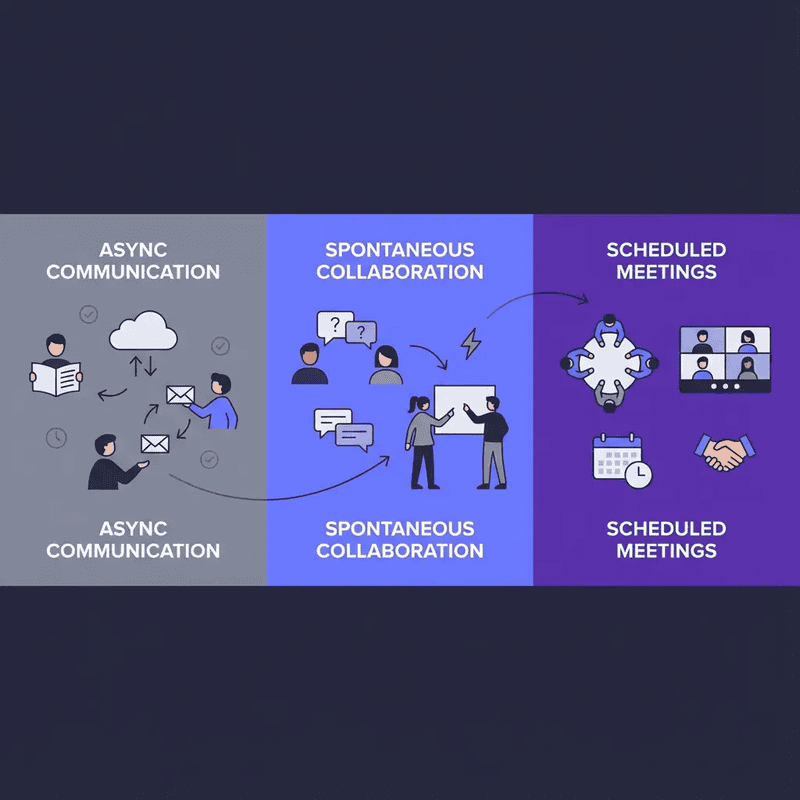
Meeting fatigue isn't a personal failing. It's a structural problem that requires structural solutions.
The best remote teams are moving away from scheduled-meeting-default culture toward a hybrid model:
✅ Async for information sharing
✅ Spontaneous conversations for quick questions
✅ Scheduled meetings only for collaborative decision-making
This isn't about having fewer connections with your team. It's about having better, more natural connections that don't drain your brain.
It's about reclaiming your calendar, your focus, and your sanity.
Because meeting fatigue is real — and you don't have to live with it.
Key Takeaways
Meeting fatigue is neurologically real: Video calls cause cognitive overload through unnatural eye contact, self-monitoring, and processing delays
Remote work creates 50% more meetings due to zero recovery time, scheduled micro-interactions, and visibility anxiety
Back-to-back meetings destroy deep work: Context switching consumes 40% of productivity, and fragmented time makes 90-minute focus blocks impossible
78% of workers say meetings prevent actual work, and 51% work overtime to compensate
Solutions exist: Meeting-free zones, async-first communication, recovery time between calls, and spontaneous collaboration models can restore productivity
The future of remote work isn't more meetings. It's smarter collaboration.
Ready to escape the meeting marathon? Discover how virtual office solutions enable spontaneous collaboration without the calendar chaos.
Comments
Your comment has been submitted