How to build a strong culture in your remote team?
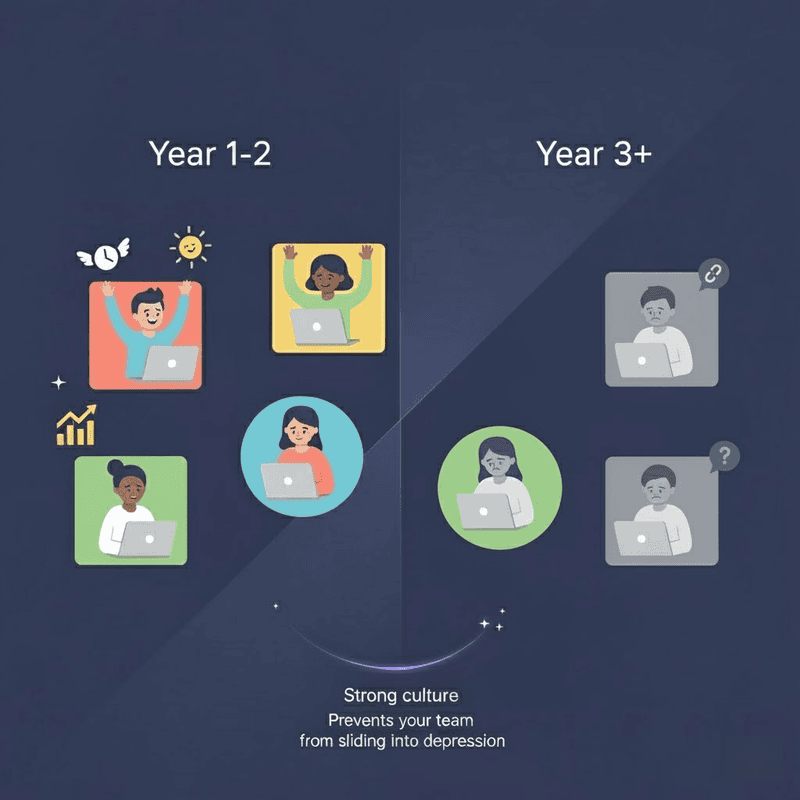
Remote work follows a predictable pattern that most leaders don't see coming: the Year 3 crisis. Years 1-2 feel glorious—the freedom, flexibility, and productivity gains are real. But by year 3-5, that freedom often transforms into isolation. And the team that once thrived starts slowly falling apart.
Building a strong culture in a remote team requires moving away from forced virtual happy hours and vague "transparency" value statements. It demands intentional systems that recreate the hallway conversations, the visible collaboration, and the spontaneous connections that happen naturally in physical offices.
This guide shows you what actually works—and what's a waste of time—based on real company experiences, research from 50+ sources, and authentic struggles from remote workers who've lived through the Year 3 crisis.
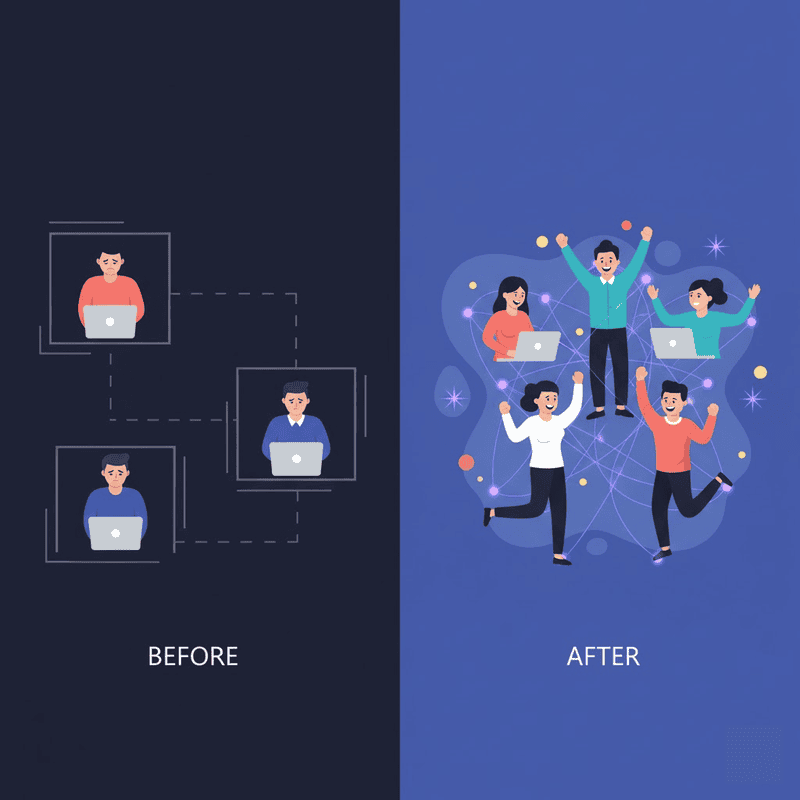
Why Remote Culture Falls Apart (And Why Most Teams Don't See It Coming)
Year 1-2: The Honeymoon Period
Remote work feels liberating. No commute. Flexible schedule. Deep focus time. Productivity soars.
Year 3+: The Slow Decline
The side conversations vanish. Teammates become Slack avatars. "Out of sight, out of mind" becomes the reality. One remote worker described it: "Within two weeks I was deep into anxiety and depression...I was incredibly isolated...I ended up in a hole."
The decline isn't dramatic. It's gradual. That's why it's dangerous.
The Real Cost of Weak Remote Culture:
70% of remote workers feel left out of their workplace
This isn't about personality types or "introverts vs extroverts." One remote worker explained: "I went for days when the only speaking I did was 'just these please ... thank you' at the store." Another added: "I had to get out in the end...Saved my life I think."
Strong culture isn't a "nice to have." It's infrastructure that prevents your team from slowly sliding into depression with no one noticing.
What NOT to Do: Failed Culture-Building Attempts (Save Your Time and Budget)
Before we get to solutions, let's eliminate the approaches that waste time, drain budgets, and make your team resent "culture building."
1. Forced Virtual Social Events
"Team-bonding activities ultimately take people away from important work, family, friends, and personal interests," notes Collective Campus.
Virtual happy hours. Mandatory fun Fridays. Online game sessions that feel like "going through the motions."
Why they fail: Screen fatigue. Forced interaction. Lack of authentic connection. As one remote worker put it: "electronic interaction is like eating tofu when you really just want red meat."
Cost: 1-2 hours per person per event × team size = massive productivity loss with minimal culture gain.
2. Creating a "Fun" Slack Channel That Nobody Uses
You've seen it. #random. #watercooler. #fun. Created with good intentions. Dead within two weeks.
Why it fails: No conversation catalyst. No reason to check it. Becomes a graveyard of cricket sounds and forced memes.
The reality: "The side conversations have just vanished," described one remote manager. Slack channels don't recreate spontaneity—they require deliberate effort that most people won't sustain.
3. Replacing In-Person Activities with Virtual Equivalents
Virtual escape rooms. Online trivia nights. Digital cooking classes.
Why they fail: They're poor replacements for normal human interaction. They try to copy in-person experiences instead of designing for the virtual medium.
Better approach: Create experiences designed FOR virtual environments, not adapted FROM physical ones.
4. Publishing Values Documents Without Systems to Live Them
"We value collaboration, transparency, and innovation."
Great. How? Where? When?
Why it fails: Most companies have clearly stated values. But values without systems are just words. Culture is how you treat people, communicate, solve conflicts, and celebrate wins together—not what you write in a Google Doc.
5. One-Size-Fits-All Culture Initiatives
The same activity for introverts and extroverts. The same recognition system for all personality types. The same collaboration style for neurodivergent and neurotypical team members.
Why it fails: "I wish someone would have told me that it would happen in the first place. Everyone talks about the freedom and positives of remote work, so when the loneliness hits for the first time it's a bit overwhelming!" shared a Buffer community member.
Different people need different types of connection.
8 Proven Strategies to Build Authentic Remote Team Culture
Culture means how you treat people, communicate, solve conflicts, and celebrate wins together. Here's what actually works.
1. Create Persistent Presence (Not Just Scheduled Meetings)
The Problem: "I wasn't accessible. My team didn't feel like they could come to me and talk."
Scheduled meetings create barriers. Questions wait for the next Zoom call. Quick conversations become hour-long calendar blocks.
What Works: Always-on virtual offices where team members can see who's available and walk over for spontaneous conversations—just like tapping someone's shoulder in a physical office.
Tools like Cosmos Video enable this through spatial presence: your avatar exists in a shared virtual space, and audio/video connects instantly when you walk close to others. No "start call" ceremony. No scheduling overhead.
The Impact: Teams using virtual offices report:
60 quick interactions daily (30-person teams)
45 minutes saved per employee from reduced scheduling overhead
20% increase in employee NPS (Frontier VFX case study)
"Feels like having a place all can join and be there. We can drop in, ask a question spontaneously, we do all our meetings here. Feels like a home base," described one Cosmos user.
How to Implement:
Set designated "office hours" when teams are in the virtual space together
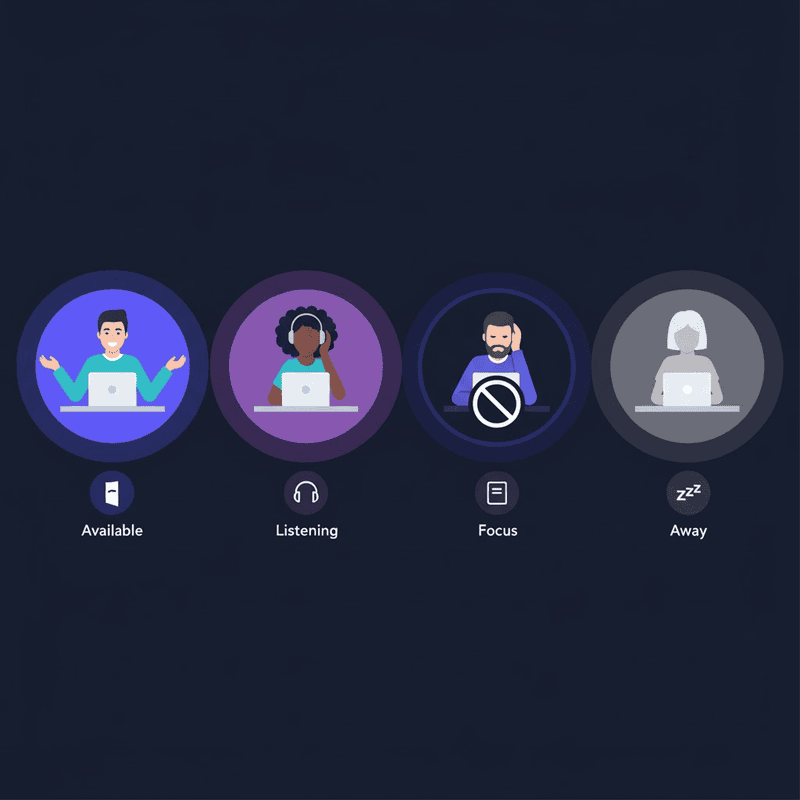
Use status systems that show availability (Available, Focusing, Away) to respect boundaries
Start with 2-hour co-working blocks, not full-day requirements
Make it opt-in initially to build trust
2. Enable Collaboration Without Communication Overhead
The Problem: "Inviting people to meetings for quick collaboration is painful. One needs to message, wait for a reply, send meeting links which is a pain."
The lag time between "I have a question" and "here's the answer" kills momentum. Async communication creates productivity loss when you need back-and-forth brainstorming.
What Works: Reduce the friction to near-zero.
When team members can see who's available and walk over to them in a virtual office, a 30-second question doesn't become a 2-hour scheduled meeting or a 20-message Slack thread.
"We talk to each other, ask for opinions, and reach solutions much faster. Our feedback cycles and team discussions are faster, and we don't have bottlenecks in our process. It is even helping us deliver the same amount of work in less time," shared a Cosmos user.
The Transformation:
Before: "Waiting for replies causes time wastage and it's very frustrating"
After: "We can reach our team members in just a couple of seconds and solve matters in that moment"
Budget Reality: Virtual office tools range from free (for small teams) to $149/month for 25 concurrent users (Cosmos Premium tier). ROI: 45 minutes saved × 25 people × ~20 working days = 375 hours monthly saved.
3. Make Work Visible (Visibility Creates Motivation and Connection)
The Problem: "Out of sight, out of mind." Remote workers feel invisible. Managers have no sense of what's happening without micromanaging.
What Works: Transparency systems that show what people are working on without surveillance.
NOT surveillance: Time tracking, keystroke monitoring, screenshot tools create anxiety and resentment.
YES visibility: Seeing which room teammates are in ("Stas is working on mockups in the design room"), what conversations are happening, who's collaborating with whom.
"Cosmos helps me see who is doing what. I don't want to control the team, but I want to help them naturally be focused. Visually seeing who is in a meeting, available, listening, or away helps me check in with people, unlike other messaging tools, where you're always available," explained one manager.
The Balance:
Show availability, not activity
Make presence visible, but give control over interruption
Use "True Statuses" (Available/Listening/Focus/Away) that auto-switch based on behaviour
Enable Focus mode that prevents interruptions while maintaining presence
Impact: Creates accountability without control. Reduces isolation without surveillance.
4. Celebrate Wins Publicly and Instantly (Don't Wait for Quarterly Meetings)

The Problem: Recognition delayed is recognition diluted.
What Works: Real-time, peer-to-peer, public celebrations.
How to Implement:
Create a #wins channel for immediate shoutouts (unlike #fun, this has a clear purpose)
Use visual recognition: Decorate virtual spaces with achievements, team milestones, project wins
Enable peer-to-peer recognition, not just top-down praise
Celebrate small wins (bug fixed, client email, milestone hit) not just big launches
"Created a sense of community around my remote workers. It has improved our culture in a way that employees are able to express themselves, care for each other, be productive and feel like they belong somewhere," shared one team lead.
5. Create Structured Flexibility (Not Rigid Hours, Not Complete Chaos)
The Problem: "Team feels all over the place, we need to help them focus with collaboration. It is easy to get distracted by phones easily."
Complete flexibility sounds ideal but creates coordination chaos. Rigid 9-5 schedules destroy the remote work value proposition.
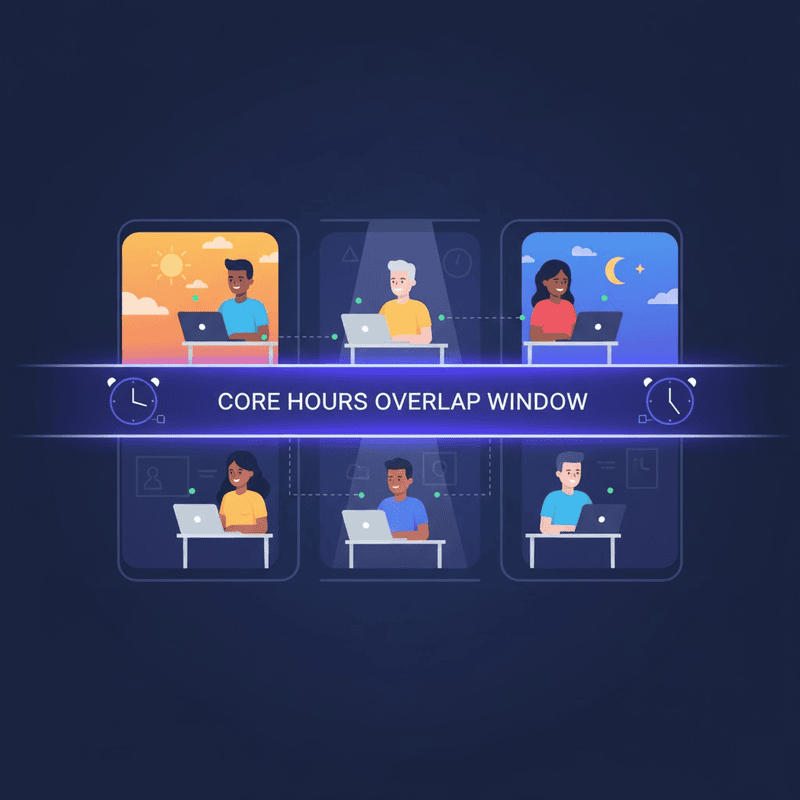
What Works: Structured flexibility—defined core hours with complete autonomy outside them.
Framework:
Core hours: 10am-2pm (team timezone) when everyone's available for collaboration
Flex hours: Early birds start at 6am, night owls at noon—their choice
Deep work blocks: 2-hour protected Focus time with status showing "unavailable"
Office hours: Designated times in virtual space for spontaneous connection
The Balance: "I can see when people are online, and others can see what's happening within the team to create visibility," while respecting individual work styles and energy patterns.
Gen Z workers want to feel connected to company purpose while maintaining work-life boundaries. Structured flexibility enables both.
6. Build Connections Through Shared Challenges (Not Forced Fun)
The Problem: Virtual team building often feels disconnected from actual work.
What Works: Culture forms around shared meaningful challenges, not artificial bonding exercises.
"People who became my best friends" happens when teams "share a meaningful and challenging journey," explained one remote worker.
How to Implement:
Hackathons with real business impact
Cross-functional problem-solving sessions
Knowledge-sharing sessions where people teach skills
Collaborative goal-setting with team ownership
Why It Works: Creates organic relationships through purpose, not forced interaction. Introverts connect through shared goals without small talk pressure.
7. Create Psychological Safety for Async and Sync Preferences
The Problem: Some people thrive in spontaneous conversations. Others need time to process. One-size-fits-all communication kills culture for half your team.
What Works: Honour both preferences with clear systems.
Framework:
Async-first decisions: Important discussions documented in writing first
Sync brainstorming: Creative ideation happens live with optional async contribution
Status transparency: "Focusing" status means async-only until they switch back
Response expectations: Async messages get 24-hour SLA, urgent needs use different channels
"Be accessible to your team. Make them feel like they could come to you and talk. Show your availability and lower the barrier to talk. With Cosmos you can control your availability with Status that are true, unlike slack: available to talk, focusing or away," noted one team lead.
Personality Inclusion:
If you're an introvert: Async channels + optional sync moments
If you're an extrovert: Sync opportunities + async documentation
If you're neurodivergent: Clarity on when/how to engage + sensory consideration
8. Measure and Iterate (Culture Metrics That Actually Matter)
The Problem: "We tried culture building" with no way to know if it's working.
What Works: Specific, measurable culture KPIs tracked monthly.
Measurement Framework:
Pulse Survey Questions (Monthly, 5-minute survey):
"I feel connected to my teammates" (1-5 scale)
"I can easily get help when I need it" (1-5 scale)
"I feel like my work is visible and valued" (1-5 scale)
"The team collaboration tools help vs. hinder" (1-5 scale)
"In the past week, how many spontaneous conversations did you have with teammates?" (Number)
Behavioural Metrics:
Number of spontaneous interactions per week (track in virtual office)
Time from question asked to answer received (collaboration speed)
Participation in optional culture moments (engagement indicator)
Employee NPS score quarterly
Leading Indicators:
Response time to messages dropping = good culture health
Number of cross-team collaborations increasing = culture strengthening
Voluntary attendance at optional sessions rising = engagement growing
Timeline Expectations:
Month 1-2: Team learning new systems, metrics may dip
Month 3-4: Adoption increases, small culture improvements visible
Month 6: Clear trends emerge, interventions show impact
Month 8: Culture becomes self-sustaining, compound effects visible
How Cosmos Fits In: The Culture Infrastructure Layer
Notice a pattern? The strategies that work all require one thing: making digital interaction feel more human.
That's where virtual office infrastructure like Cosmos becomes essential.
Cosmos isn't a team-building activity. It's the persistent space where culture lives.
How It Solves Core Culture Problems:
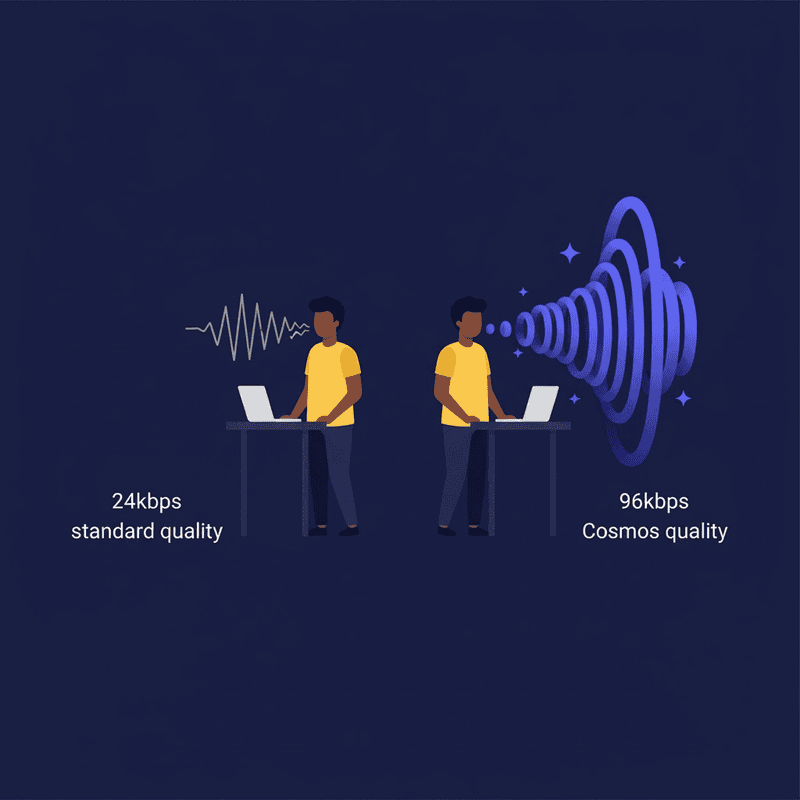
Problem: "electronic interaction is like eating tofu when you really just want red meat"
Solution: 96kbps audio quality (4x better than typical 24kbps) makes voices sound natural, preserves emotion and tone, reduces fatigue in long sessions
Problem: "miss the small everyday interactions"
Solution: Spatial presence lets you see teammates and walk over for 30-second conversations—no scheduling, no "start call" ceremony
Problem: "separation prevented effective coordination"
Solution: Live-view of who's in which rooms, what conversations are happening, ability to join with 1-click
Problem: "went for days without speaking"
Solution: Always-on presence prevents invisible isolation—you see people, they see you, even in Focus mode
Problem: "Big Brother surveillance fear"
Solution: True Statuses (Available/Listening/Focus/Away) give YOU control over interruptions. Shows availability, not activity. No keystroke tracking.
Real Results:
"Cosmos has dramatically enhanced our productivity, culture and engagement. Our employee NPS increased by 20% as a result of using Cosmos. It also helped create a stronger sense of belonging. We use it daily for meetings, review sessions, and weekly all-hands." — Mike Williams, Production Manager, Frontier VFX
"Everyone being available in our Cosmos space created a real sense of community. We go through crunch times much faster compared to back-and-forth messaging. For people who need community and quick support, Cosmos is a game-changer." — Keama, Accounting, Reconciled (60-person team)
Practical Implementation:
Start Small: Free tier for ≤4 concurrent users to test concept
Core Hours Pilot: 2-hour daily co-working blocks in virtual office
Clear Expectations: Availability statuses explained, interruption norms established
Measure Impact: Track spontaneous interactions, meeting reduction, NPS change
Scale Gradually: Premium tier ($149 for 25 concurrent users) when adoption proves value
Not a Replacement For:
Slack (keep for async messaging)
Zoom (keep for large all-hands)
Project management tools
Replaces:
Excessive scheduled "quick sync" meetings
Anxiety about when someone's available
Forced virtual social events to combat isolation
Common Objections (And How to Handle Them)
"My team might not see the benefit and won't adopt it"
Start with pain acknowledgment: "Who here has spent 20 minutes scheduling a 5-minute conversation?" Then pilot with champions first, let success spread organically.
"It feels like surveillance/Big Brother"
Address directly: "This shows availability, not activity. You control your status. We can see when you're in Focus mode, but not what you're typing. It's like seeing someone at their desk with headphones on—you don't interrupt."
"We already have too many tools"
Position as consolidation: "This replaces 10 Slack 'quick sync?' messages and 5 calendar invites per week. Less tool switching, not more."
"Working remotely can't create the same environment as in person"
Reframe: "You're right—it creates a different environment. Some parts are better (no commute, deep focus), some are harder (spontaneity). This solves the spontaneity gap."
"Won't this create constant interruptions?"
Explain statuses: "Focus mode prevents interruptions while keeping you visible. Available mode means you're open to conversations. You choose, moment by moment."
Frequently Asked Questions
How do I get leadership buy-in for culture investment?
Show cost of inaction: "We've had 3 departures this year at $100,000 replacement cost each = $300,000. Culture investment is barely $149/month for 25 concurrent users (Cosmos Premium tier). Which is the business risk?"
What if only half the team adopts the virtual office?
Start with core hours: "10am-2pm, everyone's in the space. Outside that, your choice." Network effects take over—as more people join, FOMO drives adoption.
How do I balance async and sync communication?
Default async for decisions (documented, inclusive). Use sync for brainstorming, unblocking, relationship building. Clear guidelines on which is which.
What about timezones?
Structured flexibility: Each timezone has 2-hour overlap core hours. Virtual office shows global presence—see who's around regardless of timezone.
How do I measure culture change?
Monthly 5-minute pulse survey + behavioural metrics (spontaneous interactions, response times, NPS). Leading indicators show impact before lagging indicators like retention.
What if people abuse flexible hours?
Output-based accountability: Measure deliverables, not hours. If work quality drops, it's a performance issue, not a culture system issue.
How do I handle introverts who resist synchronous culture?
Honour preferences: "You don't have to be in office hours. Async channels remain primary. Virtual office is for those who want spontaneity." Make it additive, not replacement.
What's the minimum viable culture system?
Virtual office with 2-hour core hours + weekly recognition ritual + monthly pulse survey. Start there, layer complexity as adoption grows.
How long before I see results?
Quick wins (spontaneous interactions) in weeks. Culture shifts (NPS, retention) in months. Full transformation in 12 months.
What if my team is distributed across 8+ timezones?
Create regional hubs: Americas hours, EMEA hours, APAC hours with rotating overlap windows. Full-team moments quarterly, not daily.
The Real Risk: Doing Nothing

"I am tremendously comfortable with my current remote work and decent salary but I am not at all happy in a general sense."
That's the cost of weak culture. Comfortable but not happy. Productive but isolated. Employed but disconnected.
The Year 3 crisis is real. The decline is gradual. And most teams don't realise what's happening until top performers start leaving.
Strong remote culture isn't built through forced virtual happy hours or motivational value statements. It's built through systems that enable the small, spontaneous, human interactions that create belonging.
Culture is how you treat people, communicate, solve conflicts, and celebrate wins together. With intentional infrastructure like Cosmos, you create the space where those moments happen naturally—without forcing them, without surveillance, without burning people out.
Start small. Measure consistently. Iterate quickly. And prevent your team from slowly sliding into the Year 3 crisis.
Ready to see what persistent presence feels like? Try Cosmos free for teams ≤4 users. No credit card. No forced commitment. Just see if walk-to-talk conversations feel different than scheduled Zoom calls.
The culture you want is possible. It just requires infrastructure designed for humans, not for remote management theatre.
Comments
Your comment has been submitted